
Shingled Roofs
Not every shingle problem needs a new roof. Not every shingle problem is a quick fix, either. Here's how to know which one you're dealing with.
Repairs
It usually starts with one thing you can point to. A shingle lying in the side yard after a windy night. A tab near the ridge that's lifted and creased. A brown ring on the ceiling that showed up after the first real rain of the season, or a branch that came down on the roof during a storm.
The stain on your ceiling isn't always under the leak. Water can travel along the roof deck or framing before it shows up inside, so the spot you see is where the water ends up, not always where it gets in. That's why finding the entry point comes before any repair.
What's Involved
- Tracing the leak to its source. Connecting the interior stain to where water is actually entering, using when it leaks, what's visible in the attic where it's reachable, and the roof details above it.
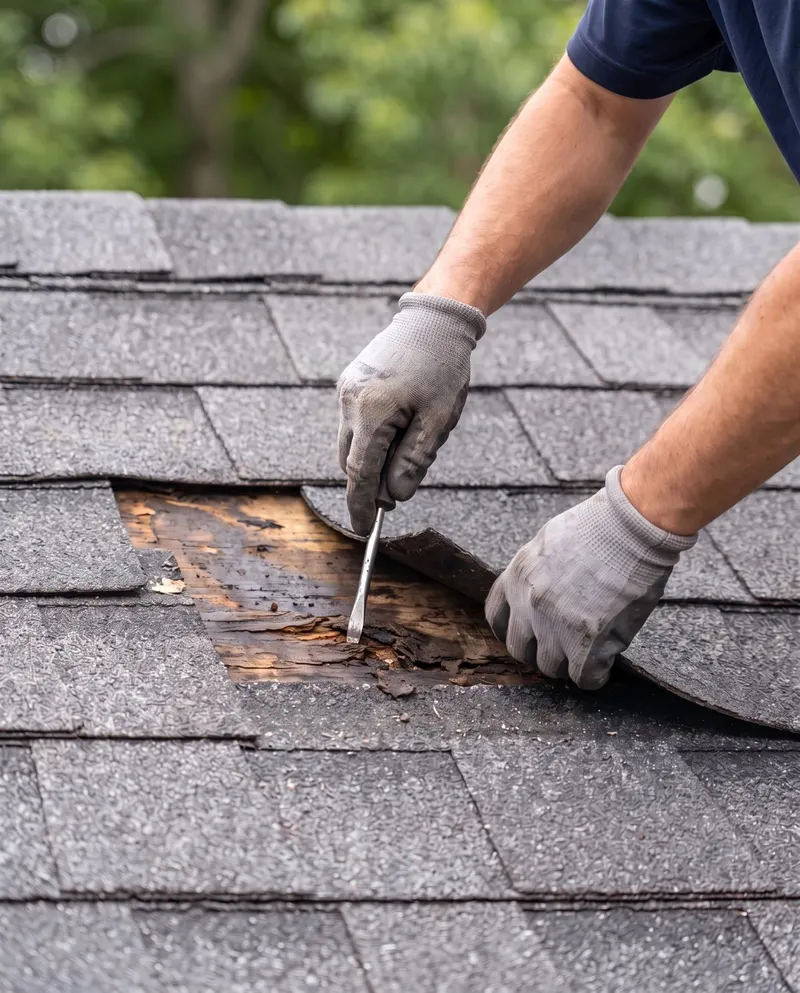
- Damaged or missing shingles. Removing the damaged ones, checking the material underneath, installing compatible replacements with the correct nailing and overlap, and hand-sealing the neighboring shingles disturbed during the work.
- Flashing at chimneys and walls. Checking the step flashing, counterflashing, and where they tie into the roofing and the wall. Metal that's rusted, cracked, or installed wrong gets replaced, since sealant can't fix missing or badly layered flashing.
- Pipe boots and roof vents. Cracked rubber collars, loose flanges, and failed fasteners get replaced and tied back into the shingles around them.
- Valleys. Working out whether the problem is debris, a bad cut, a fastener, or the lining underneath, then fixing that detail or rebuilding the valley if the damage runs deeper.
- Decking and underlayment. Opening enough of the roof to see how far the damage goes, replacing the affected sections, and connecting the repair to the sound material around it.
- Older or discontinued shingles. If your exact shingle isn't made anymore, we find the closest match available and let you know before any work starts.
- Complex repairs start with a pre-job inspection. It's included in the price and doesn't change it.
When a roof is beyond repair
Age alone doesn't decide it. A 25-year-old roof in sound condition can still take a good repair. What tips the call toward replacement is condition: shingles too brittle to accept new ones without cracking their neighbors, damage spread across the whole roof, or patches that keep failing because the real problem was never one spot. If that's where your roof is, you'll hear it in person, whether or not Build Atlas does the replacement, because patching past that point often makes the damage worse. The Full Installations section covers what comes next.
- You can point to a specific problem: missing or lifted shingles, a new ceiling stain, a cracked pipe boot, storm or branch damage.
- Most of the roof still lies flat and holds its granules, and the trouble is in one area or a few.
- You want the cause found and fixed, not the stain painted over.
- Your roof is older and you'd like its condition checked before assuming it needs replacing.
- The whole roof is curling, cracking, or showing bare patches where the granules have worn off. Start with Full Installations.
- You want a quick coat of sealant over the leak, whatever the cause turns out to be.
- The lowest priced bid is the deciding factor.
- Your roof is tile. Tile repairs have their own page.
You'll hear back within one business day. A technician comes out for a complimentary assessment, and you get a quote covering what's wrong and what fixes it, for one price, settled in writing before any work begins.
Full Installations
The repairs have started showing up in different places. A leak over the hallway last winter, another by the bathroom fan this year, and granules gathering in the gutters where the shingles above have gone bare. When a shingle gets lifted for a repair, it cracks instead of bending.
That's usually the point where the roof as a whole is wearing out, not one spot on it. Patching one area at a time stops making sense when the next weak spot is already a few feet away, and the real question becomes what should go on the house next and how it should be built.
What's Involved
- A pre-job inspection before work starts. It's included in the price and doesn't change it.
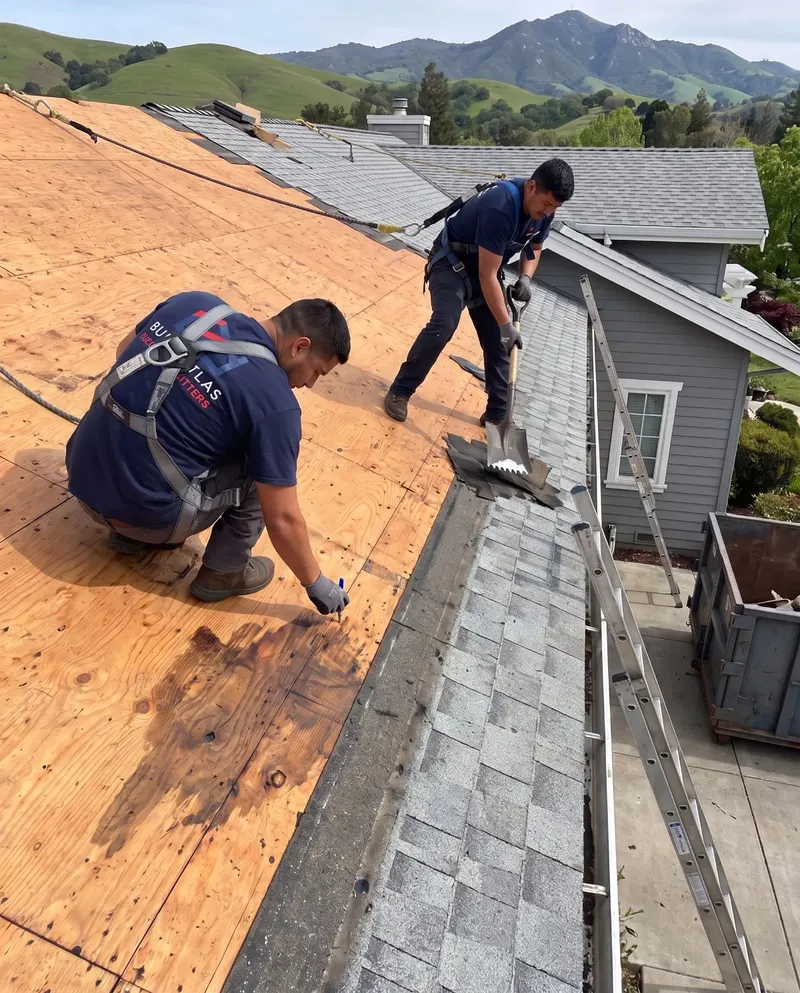
- Tear-off down to the deck. The old shingles and underlayment come off so the wood underneath can be seen and checked.
- Deck repair. Soft, rotted, or loose sheathing gets replaced so the new shingles have solid wood to nail into.
- Edge metal, underlayment, and leak barriers. Metal along the edges, a protective layer under the shingles as a second line of defense, and a self-sealing membrane in the spots that take the most water, like valleys and eaves, where the system calls for it.
- Flashing at every transition. Valleys, walls, chimneys, skylights, and plumbing vents each get new flashing, not reused, built to shed water rather than rely on sealant.
- Attic ventilation. Air coming in low at the eaves and going out high near the ridge, sized to the attic, so heat and moisture don't build up under the roof.
- Shingles, starter strips, and ridge caps. GAF is our standard line, installed to their specifications. Other manufacturers' shingles are available and installed to their own requirements for nailing, spacing, and sealing.
- Requirements for your address. Depending on the city and location, that can mean a cooler-rated shingle when more than half the roof is replaced, or a fire-rated roof system in wildfire zones. We handle the permit.
- Closeout. Finished work is reviewed with you from the ground and through photos of each stage. Your warranty coverage is part of the quote, and we'll walk you through exactly what's included.
What's under the old roof
The one thing nobody can fully see until the old roof comes off is the wood deck underneath. Most of it is usually fine. When it isn't, damaged sections have to be replaced before new shingles go on. That cost depends on the price of lumber and labor at the time, so there's no set number here, it gets specified in your contract once pricing is set.
- Your roof is nearing the end of its expected life and you'd rather plan the replacement than wait for it to fail.
- You're planning solar and want the roof done before the panels go on.
- Leaks or damage are turning up in more than one spot, or repairs keep failing in new places.
- Shingles are curling, cracking, or worn bare across whole sections of the roof.
- The problem is in one area and the rest of the roof is sound. Start with Repairs.
- Part of your roof is nearly flat. Shingles aren't made for very low slopes. A coating like GE Enduris can often be the fix for that section, if the material underneath is still sound. If it isn't, you'll hear that in person, and we'll go from there.
- The lowest priced bid is the deciding factor.
You'll hear back within one business day. A technician comes out for a complimentary assessment, and you get a quote covering what's wrong and what goes on the house, for one price, settled in writing before any work begins.