
Tile Roofs
A tile roof rarely fails all at once. Most just need occasional care, some need a specific problem fixed. Here's how to know which one you're dealing with.

Tune-Ups
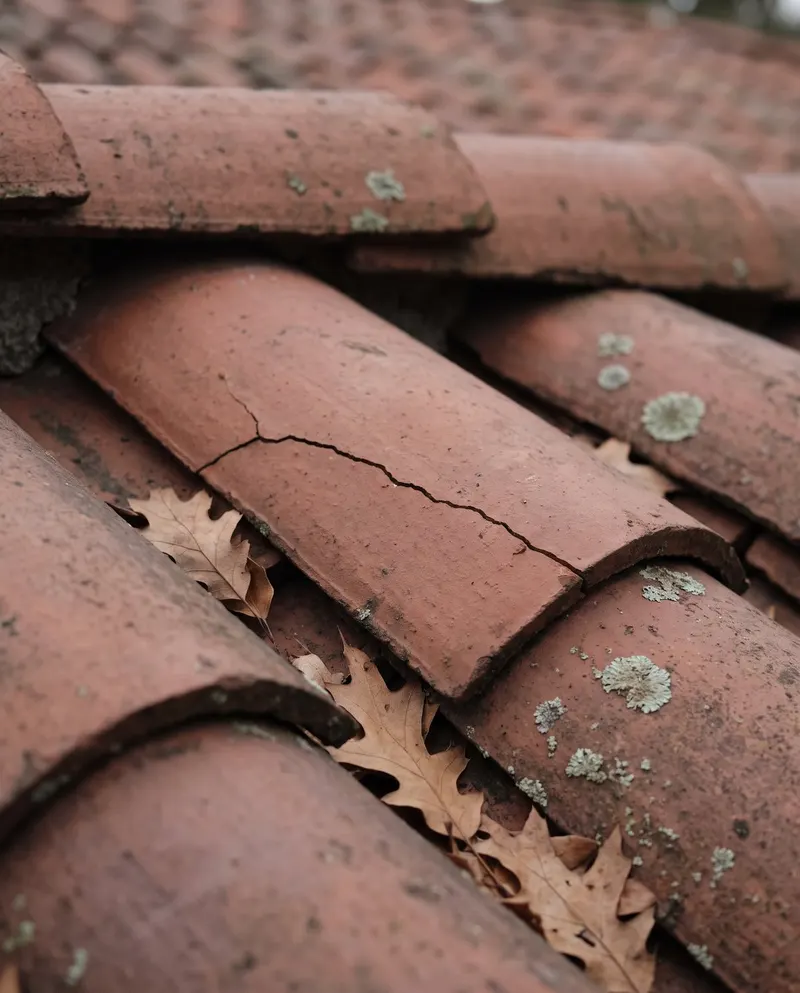
Nothing's leaking, and from the street the roof looks fine. But the valleys have been collecting leaves for a few seasons, there's a tile near the eave that's slid half an inch out of line, and one cracked after a branch came down last winter. None of it feels urgent yet.
Tile itself can last for decades. The layer underneath it, the one that catches water that gets past the tiles, usually doesn't last as long, and it's hidden from view. A slipped tile or a clogged valley sends water and sun onto that layer, and the damage builds quietly until it shows up as a stain inside.
What's Involved
- Clearing edges, valleys, and under tiles. Debris, moss, and organic buildup are removed along roof-to-wall joints, in the valleys, and from beneath tiles where it's collected, so water keeps running down the roof instead of backing up under the tiles.
- Blowing off the whole roof. Leaves, dirt, and accumulated debris are cleared from the entire surface. On hillside properties, that also removes the dry material wind-blown embers can catch.
- Resetting and replacing tiles. Broken, slipped, or cracked tiles are repaired or replaced as needed to keep the roof fully covered.
- If something turns up that points to a bigger issue underneath. We'll tell you what we're seeing and ask before going any further, a tune-up stays a tune-up unless you say otherwise.
- Site cleanup. Jobsite debris, packaging, and unused hardware are removed.
- A final look with you. The finished work, reviewed from the ground.
- Nothing's leaking yet, and you want to keep it that way.
- Your roof sits under trees, or valleys and gutters fill with leaves or needles.
- A few tiles have slipped or cracked after wind, a fallen branch, or work on the roof like a solar or satellite install.
- You bought a home with a tile roof and don't know when it was last looked at.
- Water is already coming in. Start with Repairs.
- Tiles are broken or sliding across large areas, or part of the roof is sagging.
- The underlayment has failed across the whole roof, not just one section. That's a larger job than a tune-up covers.
- Your only concern is how the tile looks. White, chalky film and surface discoloration are usually cosmetic.
- You're looking for a roof wash or coating as the main job.
You'll hear back within one business day. A technician comes out for a complimentary assessment, and you get a quote covering what the roof needs and what the tune-up will cover, for one price, settled in writing before any work begins.
Repairs
The first real storm of the season, and there's a drip by the skylight. Or a stain on the ceiling that dried out last spring and came back this fall. Maybe a branch cracked a few tiles, or the roof started leaking a few weeks after the solar panels went in.
On a tile roof, the stain and the leak are often in different places. Water that gets past the tiles can run along the layer underneath before it finds a way inside, and a broken tile isn't always the one letting water in. Most tile leaks start in the flashing or the layer under the tiles, not the tile itself, so the repair has to follow the water, not just replace what's visibly cracked.
What's Involved
- A pre-job inspection on more complex repairs. It's included in the price and doesn't change it.
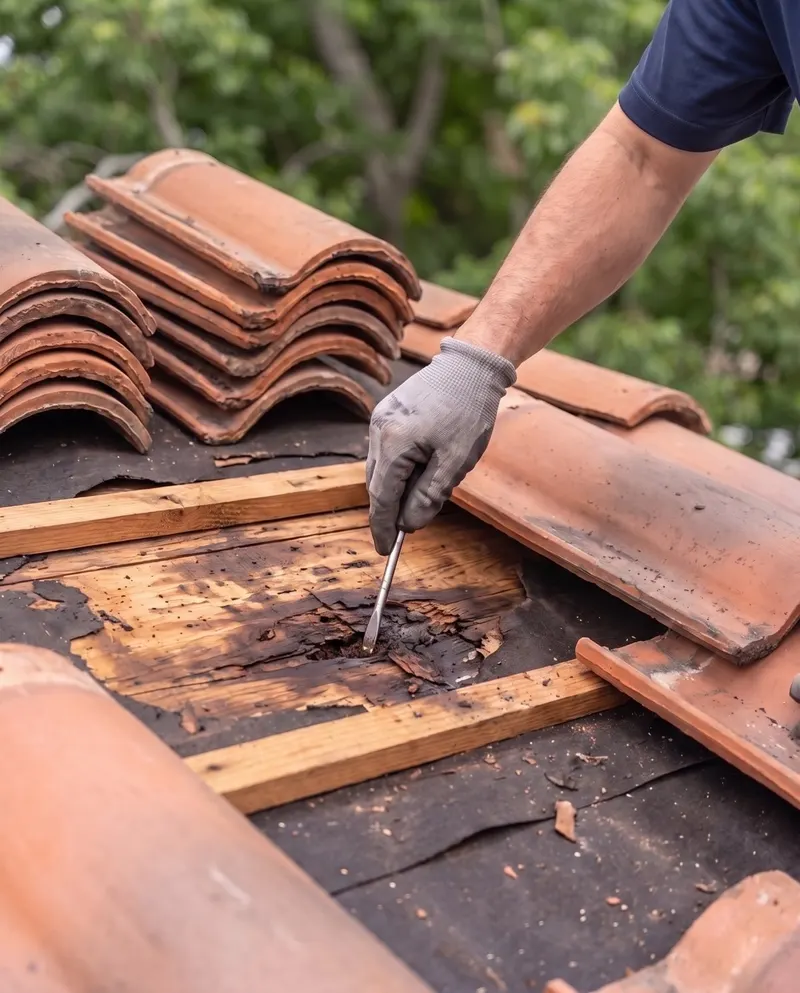
- Tracing the leak. When it leaks, what's been repaired before, any recent work on the roof, and the attic where it's reachable. Tiles get lifted to follow the water to where it's actually getting in.
- Opening up the repair area. The tiles in the affected section are removed first, so the layer underneath, the flashing, and the wood below can be checked and repaired properly.
- Replacing what's damaged. New decking, underlayment, and battens go in as needed, so the repair isn't just patched over material that's already failing.
- Fixing the flashing. Depending on what's wrong, that means refastening it, replacing a piece, or rebuilding the joint where the roof meets a wall, chimney, skylight, or vent. Sealant is used only where the detail calls for it.
- Setting the tiles back. Broken tiles are replaced, sound tiles go back with the right overlap and fastening, old nail holes are sealed, and adhesive stays out of the channels water runs through.
- Covering the area if weather is a risk. If rain is expected before the repair is finished, the open section is covered in the meantime.
- Before and after photos. What was found and what was replaced, including what was under the tiles.
When the tile can't be matched
Fit comes before color. A replacement tile has to lock into the ones around it, and a tile that looks right but doesn't seat properly can leak or crack. When the original tile is no longer made, we source the closest match we can find, often from a tile salvage yard, and let you know before any work starts if a repair will use a different tile than what's currently on your roof. Even a close match can look slightly different from the rest of the roof because of weathering or changes in production over the years.
- Water came in during rain, or a ceiling stain appeared or came back.
- Tiles broke, slipped, or went missing after a storm, a fallen branch, or work on the roof.
- An earlier repair is leaking again.
- The damage is in one area or a few, and the rest of the roof is holding up.
- Nothing's wrong yet and you'd like to keep it that way. Start with Tune-Ups.
- The layer under the tiles is worn out across the whole roof, or tiles are breaking everywhere.
- You want sealant over the crack without finding where the water is getting in.
- The repair needs to be invisible from the street.
You'll hear back within one business day. A technician comes out for a complimentary assessment, and you get a quote covering where the water is getting in and what fixes it, for one price, settled in writing before any work begins.